
Affinity Design
Service Design for Educational Organizations
CASE STUDY · COOPERATIVE PRESCHOOL
A storm, a move, and two more classes.
How a cooperative preschool moved to a new home over one summer, grew from 4 classes to 6, and didn't miss a day of school.
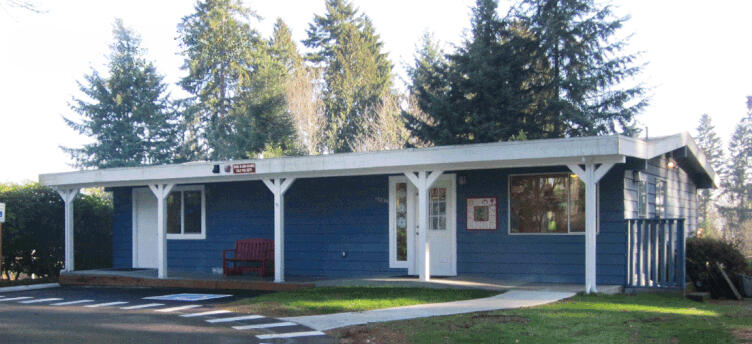
0
School days missed during move
2.5x
Usable space and acreage gained
4 → 6
Classes increased from 4 to 6,
with waitlists for 3 classes
3
Classes with waitlists
The situation
Storm damage exposed what everyone had been working around: a building too small to fix and too costly to save. Big questions arose: Could the school last? What would the regulations allow? How could parents, teachers and the board keep a stable environment together while their children's school changed under them? It looked like a building problem. It was a whole-school problem.If you lead a school, you've faced a version of this: one major decision that touches every family at once.

What I did
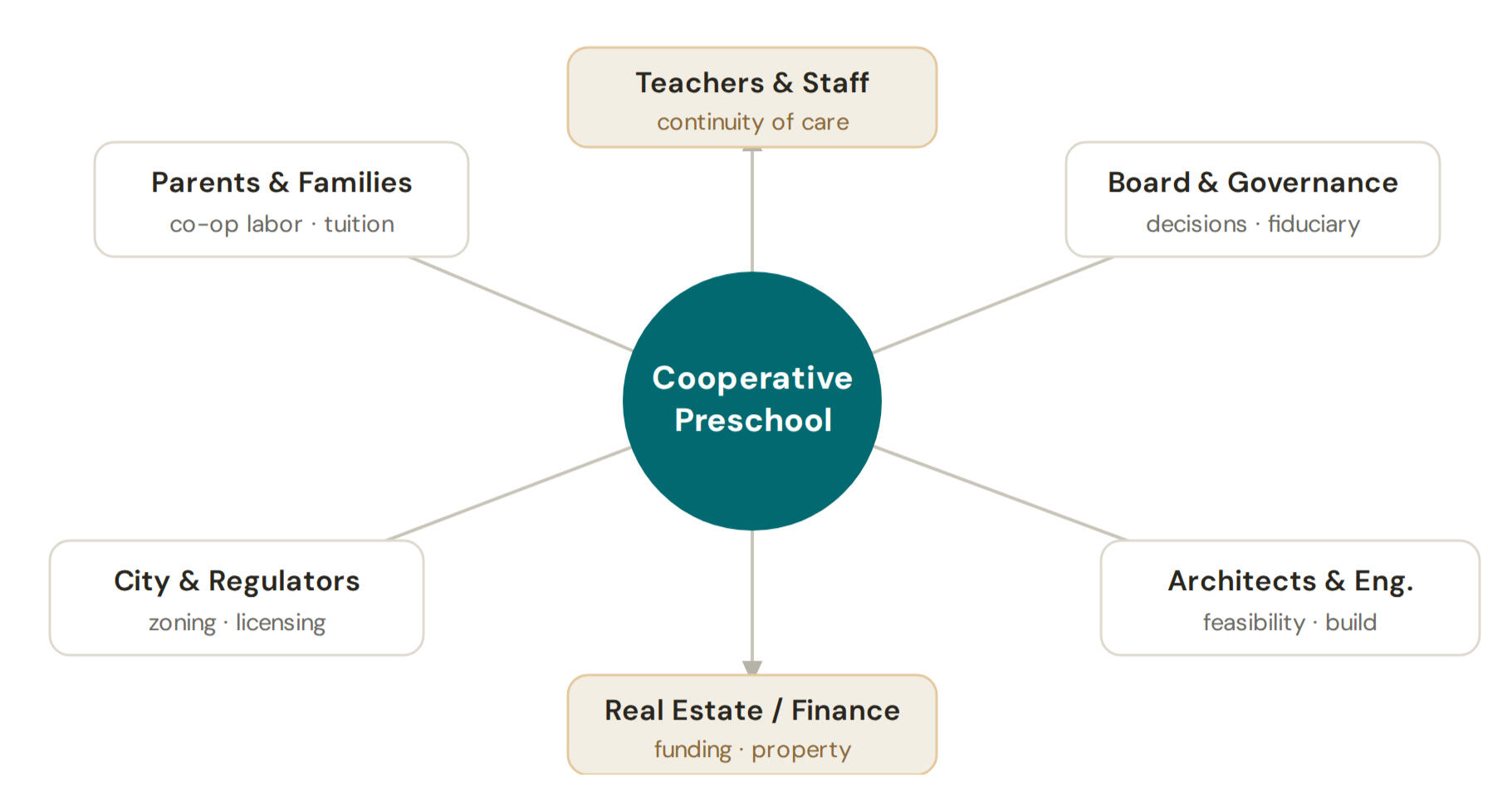
Before proposing a solution, I mapped every actor and force acting on the school — and how they connected. Seeing the whole system made it clear that the right move wasn't to repair, but to relocate.
Mapped the whole school first. Before proposing anything, I mapped every person and force acting on the school: families, teachers, the board, the neighborhood, licensing and money. The map showed that moving, not repairing, was the right call.
Kept everyone on one plan. I participated in regular Board meetings, which were followed by whole-school communication bulletins and surveys, allowing every community member to hear and be heard.
Found and prepared the new home. After observations and interviews with families and teachers, I worked with a realtor to scour every neighborhood in the vicinity. When we found a promising property, the Board toured it and called an emergency vote to purchase it. Then I led a small group that worked hand-in-hand with an architect and a master contractor to remodel the home for its new purpose: a thriving cooperative preschool. Families contributed both resources and labor, adding to the strong bond that made the school so special.
Moved in one summer. The work was sequenced so the school never stopped running. It happened over a single summer break.
What changed
No school days missed during the move.
Classes grew from 4 to 6, with multiple waitlists.
More than twice the usable space, on a lot where children could learn outdoors.
The outdoor space kept classes running through the pandemic.
The neighborhood became part of the school community.
"She saw the whole picture, kept everyone aligned, and set us up for the long term. We were so happy with the results."
- Kathy Foster, Former Director of Lake Forest Park Cooperative Preschool
What this means for your school
The plan worked because it started from what families and teachers needed, not from the building. Exit Signs works the same way: see the whole school from the family's side, then get your team behind one plan.